Confronting Technology-Facilitated Gender-Based Violence (TFGBV): HER Internet Statement.

As Mental Health Awareness Month comes to an end, HER Internet reiterates its unwavering stance against Technology-Facilitated Gender-Based Violence (TFGBV) and all forms of online harm targeting womxn and structurally silenced communities.

Across Uganda and globally, Tech Facilitated Gender Based Violence (TFGBV) is rising at alarming levels. According to Uganda’s national reports on Gender-Based Violence, more than half of Ugandan womxn have experienced physical violence, while many continue to face sexual and psychological violence both offline and online. Globally, recent findings from UN Women further show that online violence against womxn in public spaces is becoming more sophisticated and more dangerous, including the use of AI-generated sexual abuse, deepfakes, surveillance, and targeted harassment campaigns designed to silence womxn and push them out of digital spaces entirely. These incidents remind us that the digital spaces where so many of us connect, learn, and thrive can also become tools of harm and that demands our urgent response because they have real emotional, psychological, economic, and physical consequences. TFGBV impacts also contribute to anxiety, fear, trauma, depression, self-censorship, social isolation, and withdrawal from digital platforms. For structurally silenced communities in Uganda, particularly womxn human rights defenders, feminists, and young womxn navigating increasingly hostile digital environments, online violence is often compounded by state surveillance, stigma, discrimination, and weak accountability systems.

“We reflected on how political propaganda, religious extremism, misogyny and anti-gay rhetoric continue to fuel online hostility and normalize violence against our bodies and communities. These realities remind us that TFGBV is not simply a digital issue. It is deeply rooted in systemic inequalities and existing social injustices that are increasingly being replicated and amplified through technology.” Sandra Kwikiriza, Executive Director at HER Internet.

  • HER Internet rejects the normalization of online abuse and the culture of silence surrounding digital violence.
  • We reject the idea that harassment is the cost of visibility.
  • We reject digital spaces that profit from harmful content while failing to protect users most at risk.
  • We reject policies, systems, and narratives that continue to criminalize, endanger, and erase structurally slienced communities online.
  • We believe that everyone deserves safety, dignity, privacy, freedom of expression, and bodily autonomy online.

Addressing TFGBV requires urgent and collective action from governments, big tech companies, civil society organizations, media institutions, educators, and communities themselves. It requires survivor-centered responses, accessible reporting mechanisms, stronger digital security practices, platform accountability, digital rights protections, and mental health support for those affected by online harm.

Reach out to us for assistance in case you or anyone that you know experiences any form of violence on online platforms through email: info@herinternet.org. Survivors or victims of Non-Consensual Circulation of Intimate Images (NCII) can also reach out to www.stopncii.org which is a free tool designed to support victims through detection and removal of the images from being further shared online.

As HER Internet, we remain committed to building feminist digital futures rooted in care, justice, safety, and collective liberation, where structurally silenced communities can participate, organize, express themselves, and exist freely without fear.

Because digital violence is violence and silence cannot be the response.

Read or download the full statement via: https://www.herinternet.org/wp-content/uploads/2026/05/TFGBV-Statement.pdf-o.pdf

#EndTFGBV

Who Controls What We See Online? Conversations at #Bikwatako Exhibition.

Last Friday (13th March 2026), HER Internet joined the #Bikwatako Exhibition by Size Yange, a collective of artists using creativity, art, and policy to promote body positivity. The space was filled with vibrant artwork, poetry, storytelling, and community conversations. While visitors explored the exhibition stalls, we hosted dialogues on Technology-Facilitated Gender-Based Violence (#TFGBV) and other digital threats. This formed part of our ongoing #EndTFGBV campaign, aimed at raising awareness about the issue and the growing need for safer digital spaces for womxn and structurally silenced communities.

At our stall, visitors engaged with HER Internet publications, including our research reports on emerging technologies and AI, The Ripples Comic Book that reflects how online experiences shape offline life, and materials on Technology-Facilitated Gender-Based Violence (#TFGBV).

One conversation that stood out focused on how algorithms shape the health information people access online, especially around abortion rights and care. Platforms often amplify misinformation and harmful narratives while making accurate information harder to find. These issues are further explored in our Programs Director, Diana Karungi’s blog post, How Algorithms Shape and Impact Narratives on Abortion Information, Rights and Care for Womxn in Uganda.

We also had meaningful conversations about app surveillance, online privacy, and safer digital practices. One visitor shared: “Thank you for the great work you are doing. This is really the information that people need to know about, especially with the surveillance that comes with apps.”

Another added: “Thank you for the publications. I will definitely share them with my work colleagues at office. They might need the information on TFGBV.”

For us, the exhibition was a reminder that the information we shared and the conversations we had, especially during Womxn’s Month, made it clear that it is important for womxn to have access to accurate, practical knowledge about digital safety, privacy, and online harm because they shape how womxn experience the internet everyday.

We are grateful to everyone who passed by the HER Internet stall, engaged with our work, and contributed to the conversations. 💜

#Women’s Month Spotlight: Sandra Kwikiriza Celebrated for Digital Feminist Leadership Among Africa’s 100 Most Impactful Voices 2026. 

This Womxn’s Month, we are thrilled to celebrate our Founder and Executive Director, Sandra Kwikiriza, for her recognition among ABCD Africa’s 100 Most Impactful Voices 2026, a prestigious honor celebrating womxn changemakers of African descent who leverage their voices and digital content as tools for impact.

Sandra founded HER Internet, a feminist digital rights organization that advocates for the internet freedoms of structurally silenced womxn and female sex workers. Her work challenges patriarchal systems embedded in digital spaces and advances the Feminist Principles of the Internet. HER Internet champions digital literacy and security to promote good digital health, advocates for freedom of speech and expression online, decodes and addresses online violence, and studies the impact of AI on social justice.

The Work Continues

As digital spaces continue to shrink for feminist and queer expression, this recognition affirms that digital feminist activism works and that when womxn from structurally silenced communities lead, they create pathways to safer, more equitable digital futures. Learn and read more about HER Internet: https://www.herinternet.org

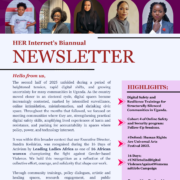
Biannual Newsletter Issue 10.

Happy New Year from HER Internet. We’re pleased to share the latest edition of our newsletter.

In this issue, we reflect on the work, conversations, and community moments that have shaped this season. From strengthening digital safety practices to holding space for honest dialogue about power, privacy, and online harm, this edition brings together the stories, insights, and collective efforts that continue to guide our work.

You’ll find highlights from our recent engagements, key reflections from community members, and updates on how we are responding to the realities of shrinking civic space, increased surveillance, and evolving digital risks. At the same time, this newsletter centers care, creativity, and the everyday acts of resistance that remind us that digital spaces can also be reclaimed.

We invite you to read, reflect, and share. Read the full newsletter here: https://www.herinternet.org/wp-content/uploads/2026/03/HER-Internets-Newsletter-2025.-issue-10-July.pdf

Sandra Kwikiriza, Executive Director at HER Internet Spotlighted by Leading Ladies Africa During 16 Days of Activism

During the 16 Days of Activism Against Gender-Based Violence 2025, Leading Ladies Africa recognized 16 extraordinary African women championing the fight against gender-based violence and our Founder and Executive Director, Sandra Kwikiriza, was among them.

Why Sandra’s Work Matters

Sandra was recognized for her fearless leadership in fighting gender-based violence, particularly in digital spaces. As an Ugandan feminist and digital rights activist, she founded HER Internet to protect structurally silenced womxn, including female sex workers, queer womxn, and other structurally silenced communities from online harm. Under her leadership, HER Internet offers digital security training, psychosocial support, and safe-space convenings that equip structurally silenced womxn with the tools they need to protect themselves online.

“We must use our collective power to create an online environment that is safe for all of us regardless of our differences in gender, sexuality, choice of work or disability.” — Sandra Kwikiriza

About Sandra

The Fight Continues

The 16 Days of Activism campaign shines a light on gender-based violence and calls for action. Sandra’s inclusion in this spotlight underscores a critical truth: the fight against GBV extends beyond the physical realm into digital spaces, where womxn face harassment, surveillance, and violence at alarming rates. As technology becomes weaponized against womxn, HER Internet’s work to build digital safety and security for structurally silenced communities is more vital than ever. Learn more about Leading Ladies Africa: www.leadingladiesafrica.org

Happy New Year!